EDITOR'S NOTE
The giant panda is China's most famous national treasure; it is not just an animal, but a living symbol of peace and friendship that China has shared with the world for decades. For an international student who studied diplomacy in a classroom, reading about pandas in books is one thing. Standing face to face with one for the very first time is something else entirely. This is the story of that moment — and how a single morning in Dujiangyan Panda Valley turned a textbook idea into something deeply real. Through the “Understanding China” “Sensing China's National Conditions Education Activities” organized by the School of Public Administration of UESTC, one student from Cambodia finally met China's most gentle ambassador.
The Softest Power
A Diplomacy Student's First Meeting with China's Most Gentle Ambassador
BY SEANG PICH (Student ID: 202524160102, Country: Cambodia)
A Long-Awaited Morning
The morning mist was still hanging over the mountains when our bus arrived at Dujiangyan. The valley was green, quiet, and cool. As I stepped through the entrance of Panda Valley and heard bamboo rustling somewhere ahead of me, I felt something unusual, a mix of excitement and nervousness that I had not expected from a field trip. Because for me, this was not just any trip. This was the day I would finally see a giant panda with my own eyes — for the very first time in my life.
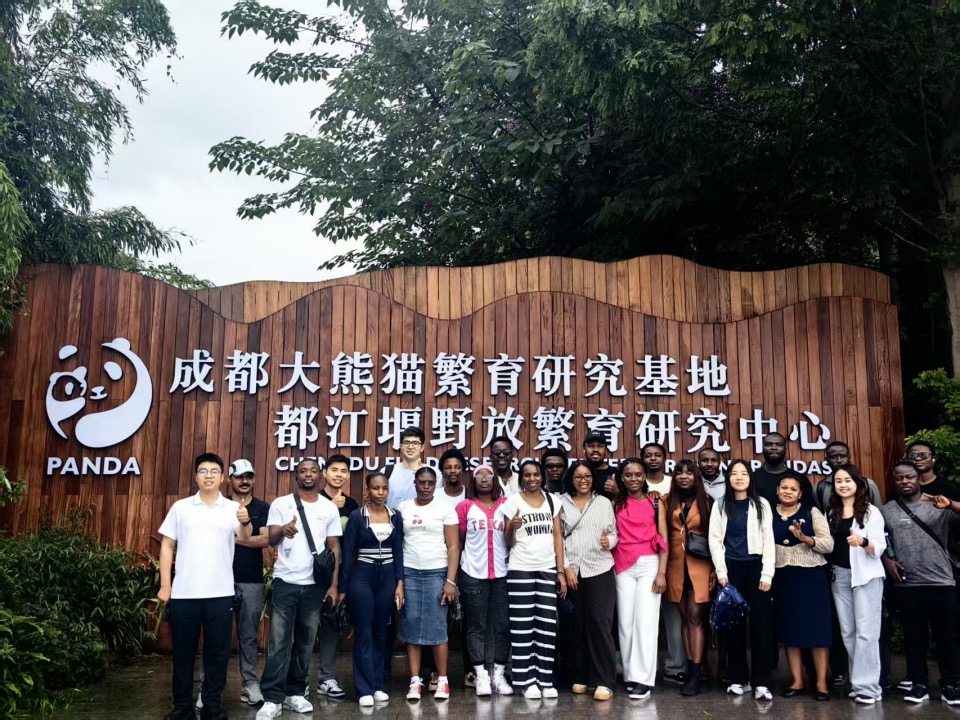
The visit was part of the “Understanding China” Sensing China Series of National Conditions Education Activities, organized by the School of Public Administration of UESTC. The activity is “Getting Closer to the National Treasure: Giant Panda & Sharing the Story of National Treasure Culture,” which brought international students from our school together for a day at Dujiangyan Panda Valley, one of China's most important panda conservation centres. For me, it was the perfect place to finally connect what I had always studied in books with something living and real.
What I Knew Before That Day
I studied International Relations and Diplomacy for my bachelor's degree in Cambodia. In those years of studying, I came across the idea of “panda diplomacy” many times. I knew that China has a long history of using giant pandas as diplomatic gifts and loans to other countries, a way of building friendship, showing trust, and creating goodwill without saying a single word in a speech. I had written about it. I had explained it to classmates. I knew that when China sends a panda to another country, it is not just an animal being transported, it is a message. A soft, powerful, and very deliberate message.
Outside of textbooks, I also knew pandas from movies. Like many people around the world, I had grown up watching Kung Fu Panda and smiling at Po, the big, clumsy, loveable panda who somehow becomes a hero. That was my panda: a cartoon character on a screen, eating dumplings and learning kung fu.
“I had read about pandas in academic papers. I had watched them in animated films. But I had never, not even once, seen one in real life.” — Seang Pich. That gap, between knowing something and truly experiencing it, was exactly what this trip was about to close.
The Moment Everything Changed
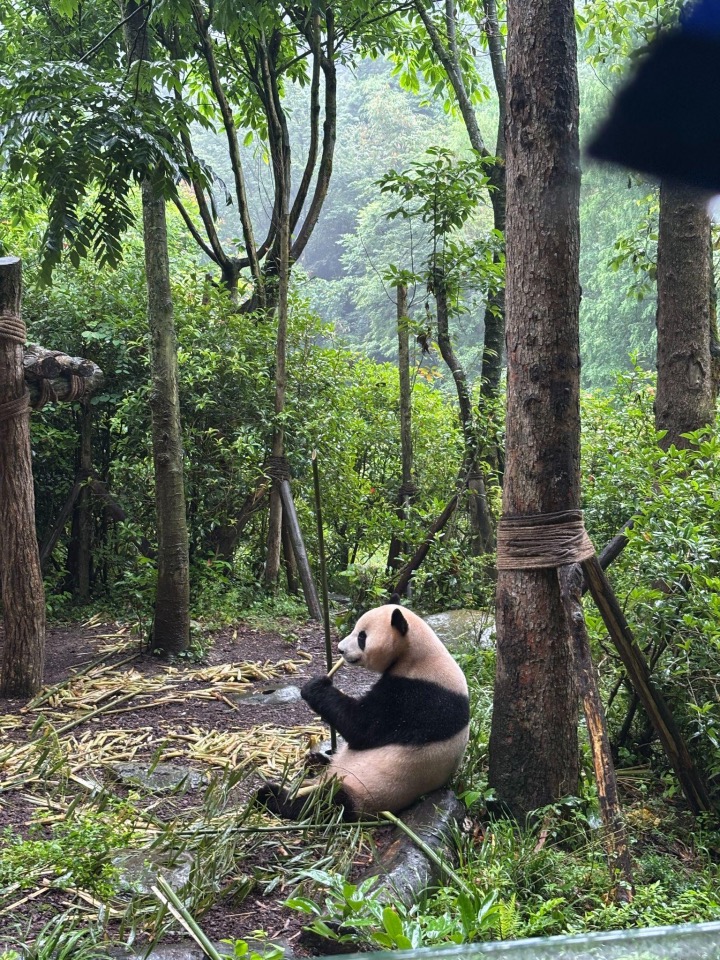
Nothing in any textbook, and no movie, prepared me for the moment I actually saw one. She was sitting quietly at the base of a wooden platform with a large pile of bamboo between her front legs. She picked up each stalk slowly, held it with a kind of care, and ate with total calm and focus, as if nothing else in the world existed. Her black-and-white fur was bright in the morning light. She did not look up. She did not need to.
I stood very still. I forgot to take a photo. For a moment, I forgot everything I had ever read about diplomacy, soft power, and foreign policy. I just stood there and felt, very simply and very honestly, amazed.
“I had studied why the world loves pandas. Standing there in front of one, I finally understood it”. — Seang Pich
There is something about the panda that words struggle to capture. It is a large, strong animal, and yet everything about it feels gentle. Its round face, its slow movements, its complete lack of aggression. Most national symbols around the world are chosen for their power and fierceness: eagles, lions, and dragons. China chose something different. China chose an animal that makes people feel safe, warm, and happy just by existing. That, I realized, is not an accident. That is the whole point.
Soft Power, Seen Clearly
Walking through the valley that morning, past the large natural enclosures where pandas roam and train to eventually return to the wild, I kept thinking about what I had learned in my diplomacy studies and how different it all felt now.
Hard power forces people to listen. Soft power makes people want to listen. But panda diplomacy does something even more special, it makes people feel affection. A panda does not make a speech. It does not sign a treaty or hold a press conference. It simply exists, with its bamboo and its round, curious face, and somehow the whole world pays attention.
For Cambodia, a small country that has been building its relationship with China for many decades, the panda symbol carries a particular meaning. It represents a China that wants to be seen not only as strong, but as kind. Not only as large, but as generous. I thought about the trips, the visits, the agreements between our two countries, and I thought: perhaps some of the warmest moments in diplomacy are not found in meeting rooms. Perhaps they are found here, in a bamboo valley, on a quiet morning, in front of an animal that asks for nothing and yet gives so much.
From Knowing To Understanding
The UESTC international student motto — 'I Come, I Learn, I Grow' — felt very true to me on that day. I had come to China to study public administration and governance. I did not expect that one of the most important lessons I would learn about diplomacy would happen not inside a classroom, but outside one — in a valley in Dujiangyan, standing two metres away from a giant panda eating bamboo.
The “Understanding China · Sensing China” programme gives international students something that books alone cannot give: direct experience. A chance to stop reading about China and start feeling it. That is a rare and valuable thing, especially for students like me, who come from other countries carrying our own histories, our own cultures, and our own questions about the world.
"I came to Dujiangyan knowing about panda diplomacy. I left understanding it, in my heart, not just in my head." — Seang Pich
Understanding between countries does not always begin with grand political statements. Sometimes, it begins with something much simpler: a shared morning, a quiet valley, and a panda who looks at the world with soft, unhurried eyes, and somehow, without trying at all, brings people a little closer together.






 Address:Qingshui River Campus: No. 2006 West source road, Chengdu high tech Zone (West District)
 Code: 611731
 E-mail: cwasuestc@163.com
 Tel: 0086-028-61831756/61831706
 Fax: 0086-028-61831756/61831706