The two parties will jointly operate the Ghana-China Centre for West African Studies (G-CWAS), with the flagship goal of establishing a “Digital Public Governance Hub”
Recently, the Ghana Institute of Management and Public Administration (GIMPA) and the University of Electronic Science and Technology of China (UESTC) formally signed a Memorandum of Understanding (MoU). Under the MoU, the two parties will jointly operate the Ghana-China Centre for West African Studies (G-CWAS), a West Africa-focused research centre hosted at GIMPA with digital public governance at its core. The flagship goal of the joint operation is to establish a “Digital Public Governance Hub” (formally referred to in the MoU as the China-Ghana Digital Governance and Public Sector Innovation Centre), making it a focal platform for research, capacity building, and applied solutions for digital transformation in Africa's public sector. The MoU was signed by Professor Samuel Kwaku Bonsu, Rector of GIMPA, and Professor Luo Guangchun, Vice President of UESTC, with an effective date of 29 May 2026 and a term of five years.
The MoU explicitly states that the cooperation aims to strengthen learning, training, collaborative research, and policy support for West Africa and China, focusing on digital governance systems, connecting the practical needs of Africa’s public sector with China’s world-class technical expertise. To achieve this goal, the parties will conduct high-quality research on digital governance, e-government, AI applications, and data systems; enhance the capacity of public officials through training programmes and exchange opportunities; build a “community of practice” among civil servants of both countries, sustained through regular exchanges and annual seminars; produce research outputs on a wide range of issues concerning West Africa and China that can provide policy support to both governments; and thereby advance China-Africa cooperation in digital governance and public sector innovation.
According to the MoU, the establishment of the “Digital Public Governance Hub” is the flagship goal of the partnership and will serve as a flagship project under the China-Africa cooperation framework, dedicated to strengthening public sector governance, digital transformation, and leadership development in Africa. This aligns with the inauguration of the “Centre for West African Studies (CWAS) for Digital Public Governance” at GIMPA on 1 June 2026, marking a transition from the inauguration phase to a new stage of institutionalised and substantive operation.
The MoU designates key contacts for the partnership: on the GIMPA side, Professor Bonsu, Rector and Executive Director of G-CWAS; on the UESTC side, Professor Shurong Zhao, Director of the Centre for West African Studies at UESTC. The MoU also stipulates that specific terms for each collaborative activity will be set out in written annexes. The MoU is governed by and interpreted under the laws of Ghana and China, is valid for five years, may be renewed or amended by mutual consent, and may be terminated with six months' written notice.
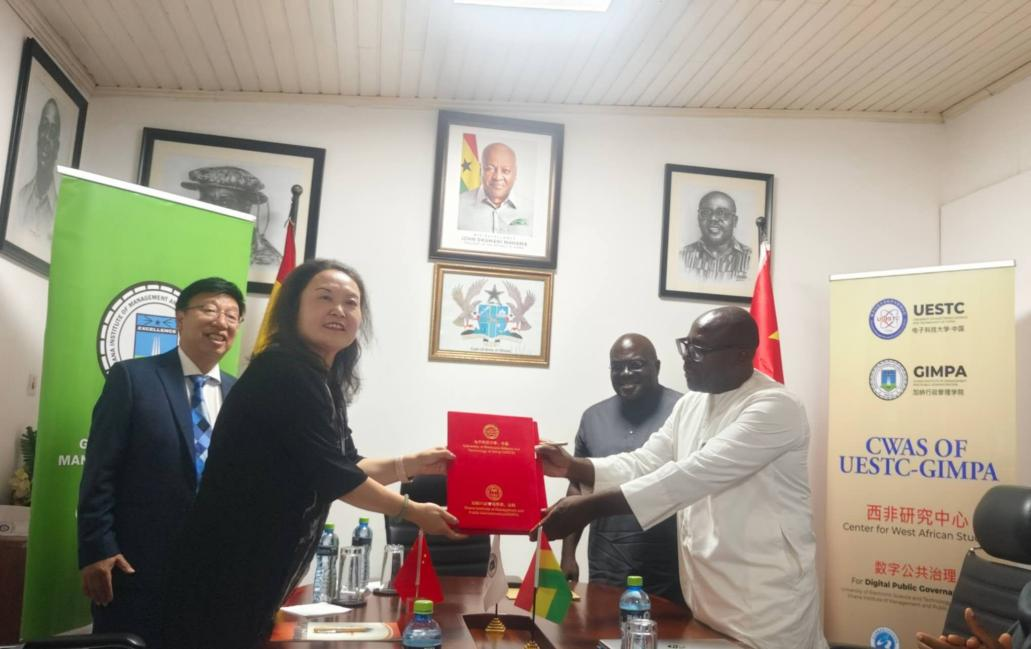
Figure 1: Representatives of UESTC and GIMPA exchange the MoU documents, with a backdrop displaying the “CWAS·UESTC-GIMPA Digital Public Governance” centre logo.
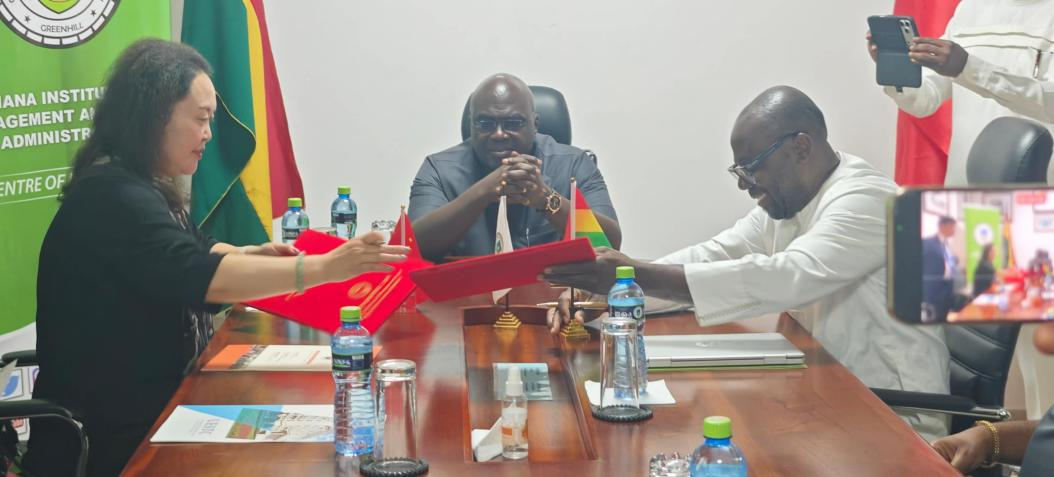
Figure 2: Signing (exchange) ceremony – representatives exchange MoU documents in front of the national flags of China and Ghana.
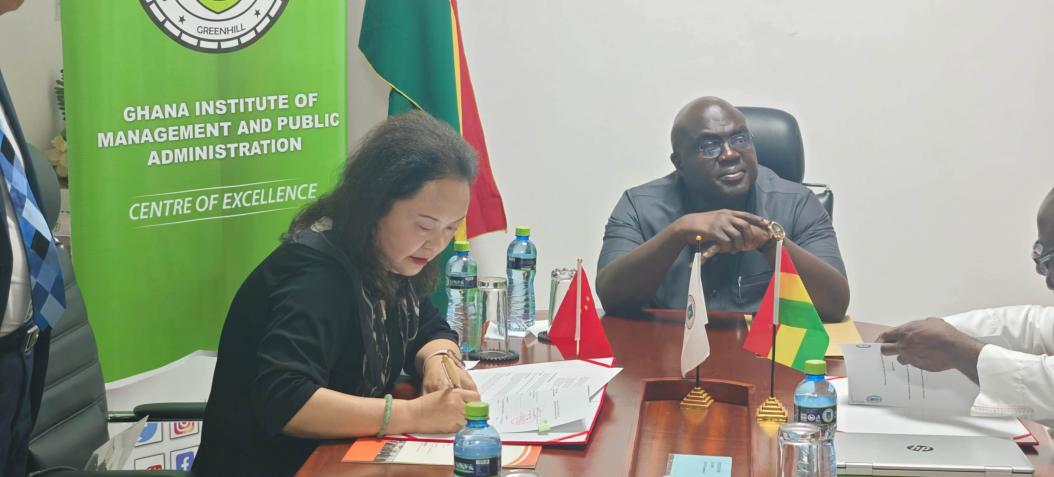
Figure 3: UESTC representative signs the MoU.
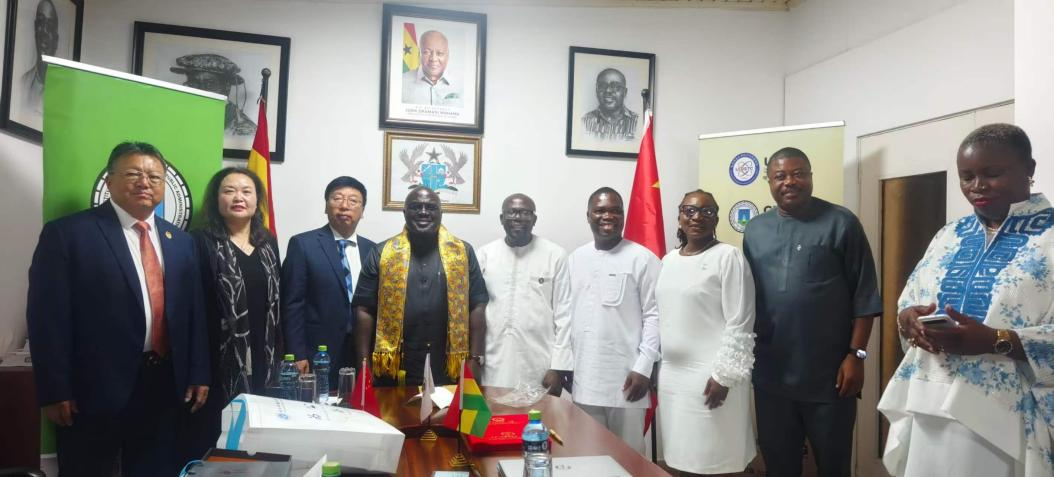
Figure 4: Group photo of UESTC and GIMPA representatives after the signing ceremony.
Introduction to the Ghana-China Centre for West African Studies (G-CWAS) and the Digital Public Governance Hub:
Under the MoU, the Ghana-China Centre for West African Studies (G-CWAS) is jointly operated by GIMPA and UESTC as a focal platform for research, capacity building, and applied solutions for Africa's digital transformation, particularly in the public sector. Its flagship goal is to establish the "Digital Public Governance Hub" (Digital Public Governance Hub), through which collaborative activities – including digital governance research, public official training, annual seminars, and policy support – will deliver tangible outcomes for both countries, contributing to the building of a China-Africa community with a shared future.





 Address:Qingshui River Campus: No. 2006 West source road, Chengdu high tech Zone (West District)
 Code: 611731
 E-mail: cwasuestc@163.com
 Tel: 0086-028-61831756/61831706
 Fax: 0086-028-61831756/61831706