Reimagining Healthcare Delivery in Africa: How Telemedicine and Smart Imaging Systems are Transforming Diagnostics under Healthy Ghana 123 Project
By Adisa Muhammed – 202524160113,尼日尼亚
School of Public Administration, University of Electronic Science and Technology of China (UESTC)
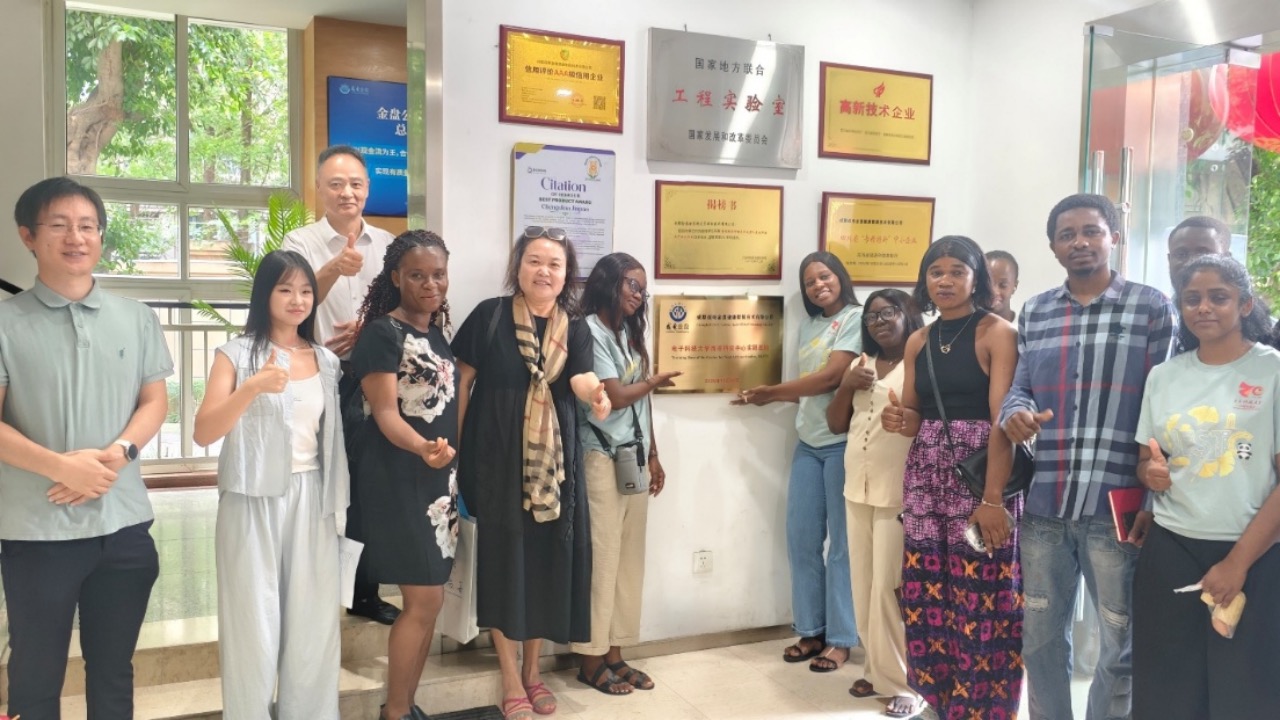
Walking into the Chengdu UESTC Goldisc Health Data Technology Co., Ltd for the first time, I was filled with curiosity about how digital innovation could reshape the future of healthcare. As an international student, participating in a field teaching activity organized by the Center for West African Studies (CWAS), UESTC, became much more than an academic visit, it was an opportunity to experience firsthand how technological innovation, international collaboration, and practical learning can come together to address real-world healthcare challenges. In 2025, Chengdu UESTC Goldisc Health Data Technology Co., Ltd became one of the CWAS's co-built training bases, providing students with an opportunity to connect classroom learning with real-world technological innovation. The training base serves as a platform for understanding China's advances in smart healthcare while exploring how such innovations can contribute to healthcare development and China-West Africa cooperation.
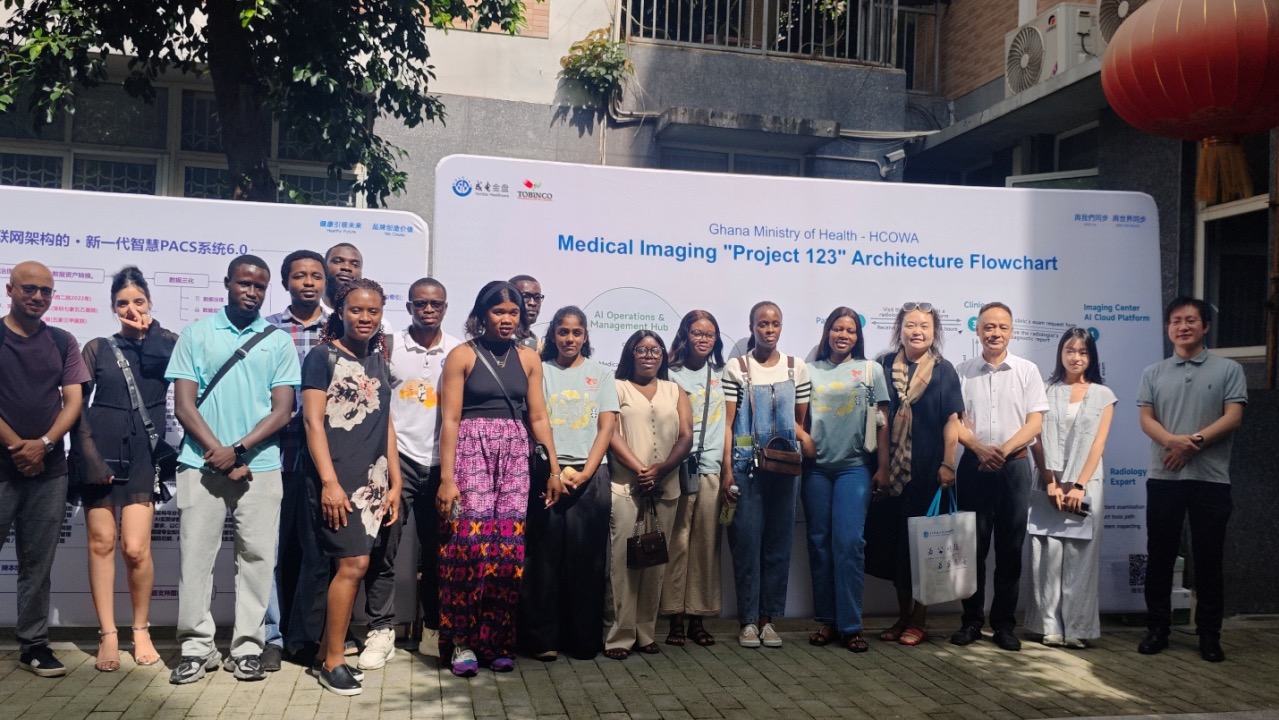
During the visit, I was impressed not only by the advanced medical technologies on display but also by how they were applied to solve practical healthcare challenges. Instead of viewing telemedicine as a futuristic concept, I saw how cloud-based diagnostic systems are already improving healthcare delivery in everyday clinical practice. The visit provided a valuable opportunity to observe technologies that have been successfully implemented in China and are now being introduced internationally through Healthy Ghana 123 Project, offering useful lessons for healthcare systems across Africa.
Healthcare systems around the world are under increasing pressure to provide faster, more accurate, and more coordinated diagnostic services. Conventional diagnostic workflows often involve fragmented processes, especially when healthcare facilities lack advanced imaging equipment or specialist expertise. This can delay diagnosis, increase healthcare costs, and reduce efficiency. Modern telemedicine addresses these challenges by connecting healthcare facilities through integrated information systems, allowing medical images and reports to be shared securely between healthcare professionals regardless of their physical location.
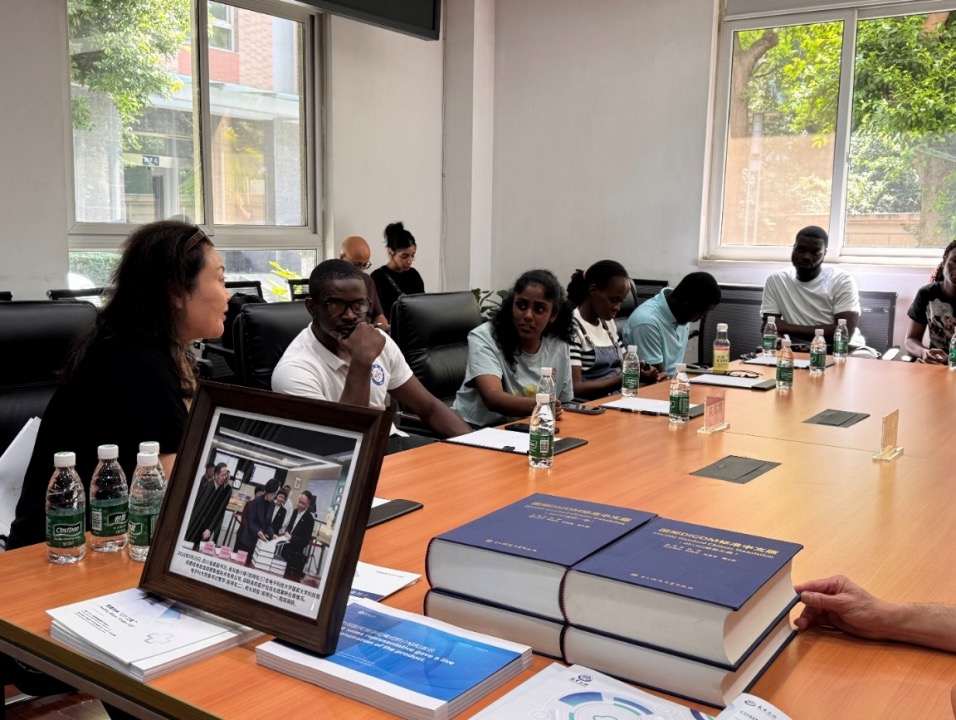
One of the most interesting aspects of the visit was learning how Healthy Ghana 123 Project, developed in collaboration with CWAS and Chengdu UESTC Goldisc Health Data Technology Co., Ltd, applies this model in practice. Through a cloud-based diagnostic platform, healthcare facilities can refer patients to shared imaging centers where examinations are performed using advanced equipment. The images are then uploaded to a centralized platform for interpretation by qualified specialists before undergoing expert review and being returned electronically to the referring healthcare provider.
What impressed me most was the interoperability of the entire system. We observed how different hospitals, imaging centers, and clinics work together through one connected platform. Facilities that do not own sophisticated diagnostic equipment only require a computer, a stable internet connection, and access to the cloud platform to participate in the network. This integrated approach allows patients to receive specialist diagnostic services without travelling long distances simply to access advanced imaging technology. It also reduces unnecessary referrals while making healthcare services more efficient and coordinated.
As a student of public administration, I found this experience particularly meaningful because it demonstrated that innovation in healthcare is not only about acquiring advanced technology but also about improving governance and healthcare service delivery. Watching the complete diagnostic workflow; from image acquisition to remote interpretation and expert review, helped me appreciate how technology can redesign healthcare processes rather than merely digitizing existing ones.
The visit also encouraged me to reflect on concepts discussed in the course Globalization and World Politics. From a liberal perspective, the project illustrates how international cooperation and knowledge sharing can produce mutual benefits. Chinese technological expertise, combined with partnerships in Africa, creates opportunities for improving healthcare services while strengthening international collaboration. Rather than viewing globalization only through the lens of competition, this experience demonstrated how cooperation can address common development challenges and generate shared public value.
Equally important was seeing how technologies that have already improved healthcare delivery in China can be adapted to different national contexts. Throughout the demonstration, we learned how telemedicine has expanded access to diagnostic services by connecting healthcare providers with centralized specialist expertise. Instead of requiring patients to travel across cities or even across national borders for advanced imaging interpretation, healthcare providers can now access expert diagnostic support through secure cloud-based systems. This model improves efficiency while reducing both time and financial burdens on patients.
The technologies demonstrated at Goldisc, including advanced Picture Archiving and Communication System (PACS), standardized Digital Imaging and Communications in Medicine (DICOM), artificial intelligence-assisted reporting, and three-dimensional image processing also highlighted the importance of interoperability. Digital standards enable different healthcare institutions and imaging devices to communicate effectively, creating an integrated diagnostic ecosystem rather than isolated facilities. Such coordination ultimately improves diagnostic quality, supports faster clinical decision-making, and strengthens healthcare system performance.
Of course, technology alone cannot guarantee success. Countries adopting telemedicine must continue investing in digital infrastructure, strengthen cybersecurity and data governance, establish appropriate regulatory frameworks, and train healthcare professionals to operate within connected healthcare systems. Public-private partnerships such as the collaboration between Chengdu UESTC Goldisc Health Data Technology Co., Ltd and Healthy Ghana 123 Project demonstrate how governments, industry, think tanks, and research institutions can work together to accelerate healthcare innovation responsibly.
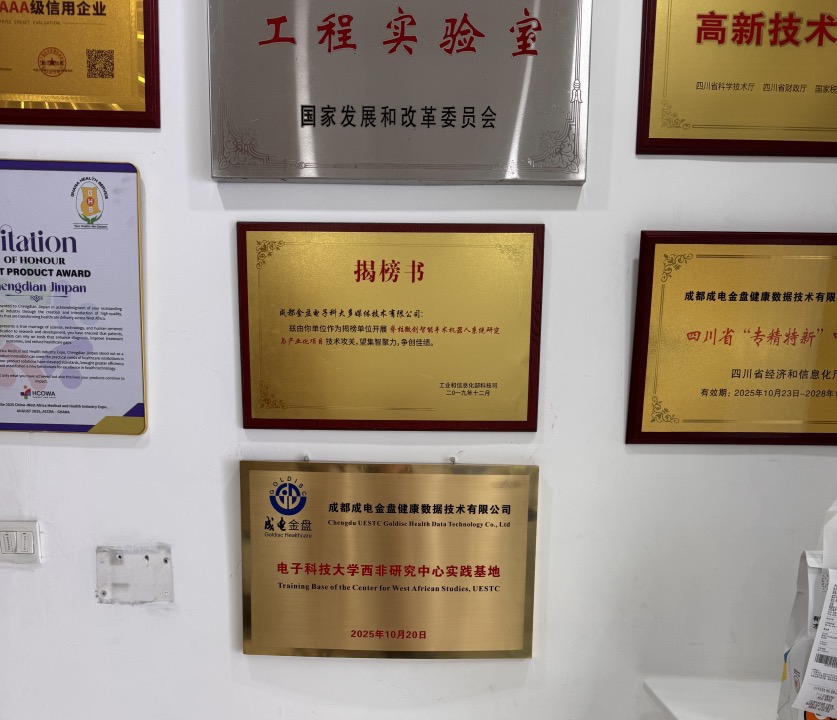
This field teaching activity has strengthened my understanding of how technological innovation, international cooperation, and effective public policy can work together to improve healthcare delivery. More importantly, it has shown me that healthcare modernization is ultimately about creating systems that serve people more efficiently and equitably. As the Center for West African Studies continues expanding its international partnerships through training bases such as Chengdu UESTC Goldisc Health Data Technology Co., Ltd, these learning experiences will not only broaden students' global perspectives but also help share the Center's academic achievements and practical cooperation with West Africa, contributing to deeper people-to-people exchanges and sustainable development.
Edited by Qianwen Xu






 Address:Qingshui River Campus: No. 2006 West source road, Chengdu high tech Zone (West District)
 Code: 611731
 E-mail: cwasuestc@163.com
 Tel: 0086-028-61831756/61831706
 Fax: 0086-028-61831756/61831706