Museum director and veteran collector Xie Yanshen shares more than three decades of experience in Africa with UESTC’s international students
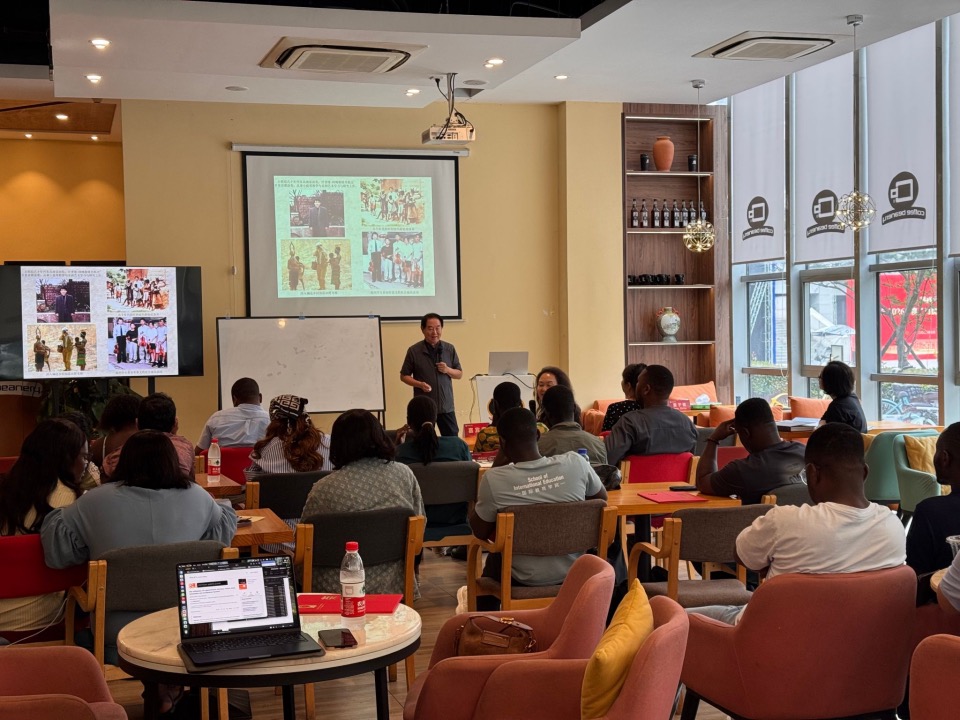
Figure 1: Xie Yanshen shares his experiences and introduces students to African culture.
CHENGDU, China — July 1, 2026 — The Center for West African Studies of the University of Electronic Science and Technology of China (UESTC) hosted a special lecture, “Getting Close to Africa: Building a Bridge for China-Africa Cultural Exchange,” inviting international students to explore the cultures of the African continent. The event was part of the 2026 China-Africa Year of People-to-People and Cultural Exchange and the Center’s “Understanding China” education series for students from abroad.
The lecture was co-hosted by the China-Africa Academic Exchange and Talent Joint Training Base and UESTC’s School of Public Affairs and Administration, and organized by the Center for West African Studies. The guest speaker was Xie Yanshen, head of the African Art Research Institute of Nanjing University of the Arts (AARI) and director of the Gulf of Guinea International Museum of African Art (MIAA). Professor Zhao Shurong, Director of the Center for West African Studies, chaired the session; international-student counselor Wang Ji and foreign-affairs secretary Xue Yudan also took part, with Ms. Xue coordinating the event.
Drawing on more than 30 years of collecting and studying African art, Xie introduced the students to the continent’s customs, its diverse folk traditions, and the spirit embodied in its traditional art. He recounted his own journey into African culture and China-Africa artistic exchange, describing how exhibitions, donations of works, and joint academic projects have helped build cultural bridges, and he explored the philosophy behind traditional African art to challenge common stereotypes about the continent.
Chinese and African civilizations each have their own appeal and complement one another, Xie said, calling young people “the most important bridge” in cross-cultural exchange. He urged the students to become two-way ambassadors for both cultures, sharing their own countries and cultures with China while carrying China’s development experience and heritage back to Africa, and so strengthen the grassroots foundations of China-Africa friendship.
In a lively question-and-answer session, students drew on their own disciplines and home countries to ask about protecting African art, China-Africa cultural and tourism cooperation, and grassroots cultural collaboration. Xie answered each question from his years of firsthand experience, offering fresh perspectives for their area and country studies and for cross-cultural practice.
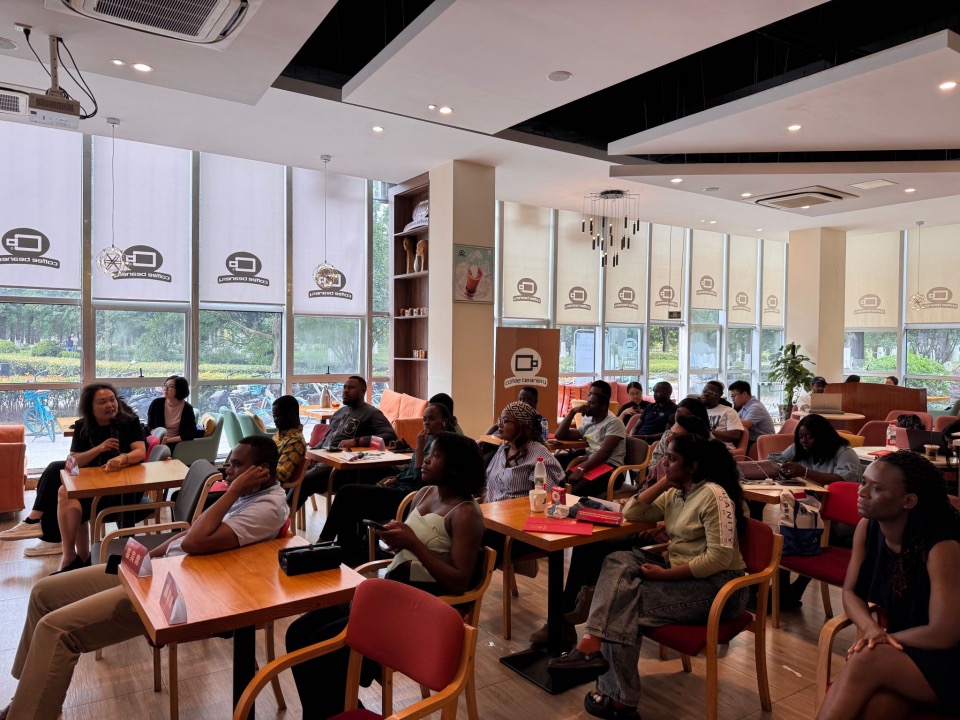
Figure 2: Students take part in the question-and-answer session, discussing China-Africa cultural exchange with faculty.
Closing the event, Professor Zhao said the lecture had allowed students to feel the appeal of African civilization and the depth of China-Africa exchange through a firsthand account. The Center for West African Studies will continue to work with partners including the African Art Research Institute of Nanjing University of the Arts (AARI) and the Gulf of Guinea International Museum of African Art (MIAA) to hold African-art study tours, talks, and joint research under the 2026 China-Africa Year of People-to-People and Cultural Exchange.
Students said the lecture moved beyond textbook theory and gave them a real sense of the power of people-to-people exchange, adding that they hoped to pursue cross-cultural research and help tell the story of China-Africa friendship from a young generation’s perspective.
About Xie Yanshen
Xie Yanshen is the director of the Gulf of Guinea International Museum of African Art (MIAA), head of the African Art Research Institute of Nanjing University of the Arts (AARI), and founder of the “MIAA · Art Creates Africa” studio in Beijing. He is a specially appointed researcher at the National Museum of China and an adviser to the Togo chapter of the International Council of Museums (ICOM), and he holds several China-Africa cultural and community leadership roles. A former first violinist and soloist with the Jiangsu Symphony Orchestra and the Jinling String Quartet, he traveled to Africa in the late 1980s to teach violin and music and began collecting and studying African art. Since 2005 he has staged African-art exhibitions at institutions including the Nanjing Museum, the National Museum of China, the Shandong Art Museum, and the Tsinghua University Art Museum, and he founded the Gulf of Guinea International Museum of African Art in 2011. Through exhibitions and donations of works, he has long worked to promote people-to-people cultural exchange between China and Africa.
About the China-Africa Academic Exchange and Talent Joint Training Base
Inaugurated in November 2025 at the Gulf of Guinea International Museum of African Art (MIAA) in Lomé, Togo, the Base is jointly established by the Center for West African Studies of UESTC (CWAS), the Digital Culture and Media Research Center of UESTC (DCMR), the MIAA, and the African Art Research Institute of Nanjing University of the Arts (AARI); Wang Min, China’s Ambassador to Togo, attended the inauguration. A domestic site was added in Beijing in December 2025, giving the Base a presence in both China and West Africa. It focuses on digital cultural communication, area and country studies, the preservation of African art, and the training of interdisciplinary China-Africa talent, and serves as a platform for joint research, faculty and student exchange, and cross-cultural education.
Issued by the Center for West African Studies of UESTC.
Edited by Ruiqi Huang






 Address:Qingshui River Campus: No. 2006 West source road, Chengdu high tech Zone (West District)
 Code: 611731
 E-mail: cwasuestc@163.com
 Tel: 0086-028-61831756/61831706
 Fax: 0086-028-61831756/61831706