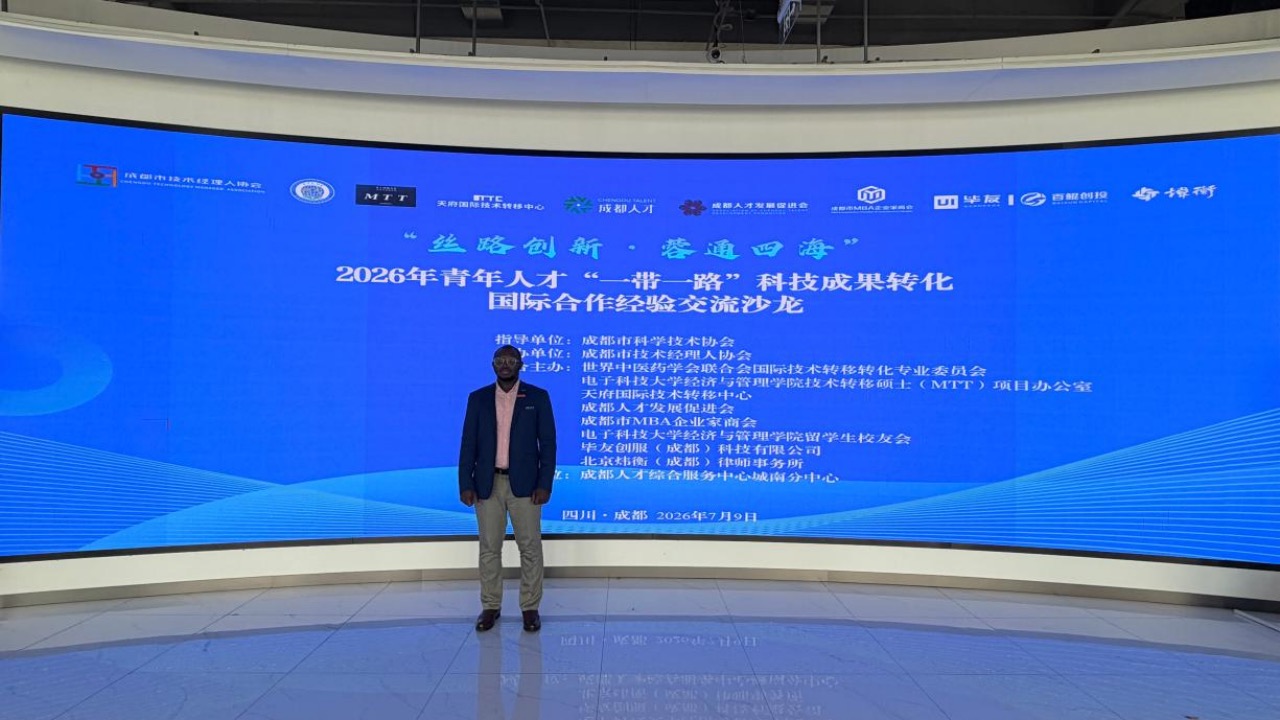
Chengdu, China — July 9, 2026 — Tamimu Mohammed Gadafi, a Ghanaian doctoral candidate at the School of Economics and Management (SEM) of the University of Electronic Science and Technology of China (UESTC), and a young scholar at the Centre for West African Studies (CWAS-UESTC), was invited as a guest speaker to participate in the “Silk Road Innovation Chengdu Connecting the World” 2026 Youth Talent Belt and Road Technology Achievement Transformation International Cooperation Experience Exchange Salon.
The event was organized under the guidance of the Chengdu Association for Science and Technology and hosted by the Chengdu Technology Managers Association, with support from various innovation platforms, technology transfer organizations, universities, and international cooperation institutions. The salon brought together representatives from technology transfer agencies, science and technology enterprises, research institutions, young researchers, and international innovation partners to discuss opportunities and challenges in advancing the international transformation and commercialization of scientific and technological achievements under the Belt and Road Initiative.
As one of the invited thematic speakers, Gadafi delivered a presentation titled:
“From an African Perspective on China’s Technology Going Global: Ghana’s Demand for Scientific and Technological Achievement Transformation and Prospects for China–Africa Science and Technology Cooperation.”
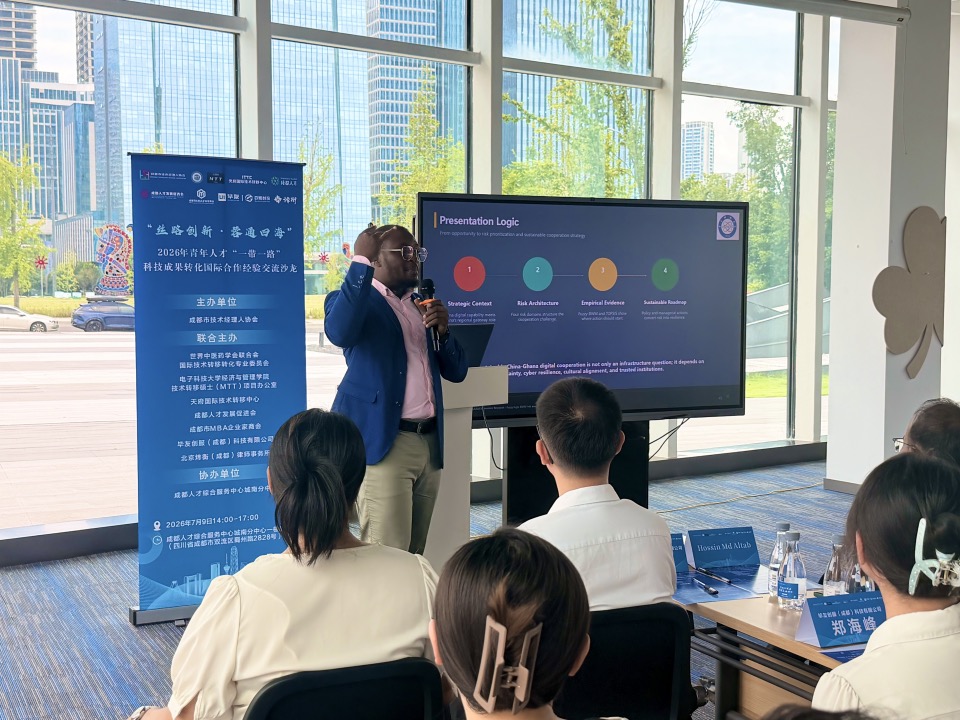
In his presentation, Gadafi provided insights into Ghana’s current landscape of scientific and technological innovation, technology transfer needs, and challenges faced in transforming research achievements into practical applications. Drawing from his academic background and experience as an African scholar studying in China, he shared observations on how Chinese technologies and innovation platforms could better engage with African markets through strengthened cooperation mechanisms, localized adaptation, and sustainable partnership models.
Gadafi highlighted that Africa represents an emerging market with significant demand for digital transformation, smart technologies, e-commerce development, renewable energy solutions, and sustainable infrastructure. However, effective technology transfer requires not only technological capabilities but also a deep understanding of local market conditions, institutional environments, human capacity development, and long-term collaborative frameworks.
“Technology cooperation between China and Africa should move beyond technology delivery toward knowledge sharing, joint innovation, and capacity building,” Gadafi noted. “Through the Belt and Road Initiative, there are tremendous opportunities to establish mutually beneficial partnerships that allow technologies to create sustainable social and economic value in African communities.”
The presentation also introduced perspectives related to: China–West Africa digital cooperation and e-commerce development; Technology-driven sustainable development pathways in Ghana; Challenges and opportunities for Chinese enterprises entering African markets; The role of international students and young researchers as bridges for innovation cooperation.
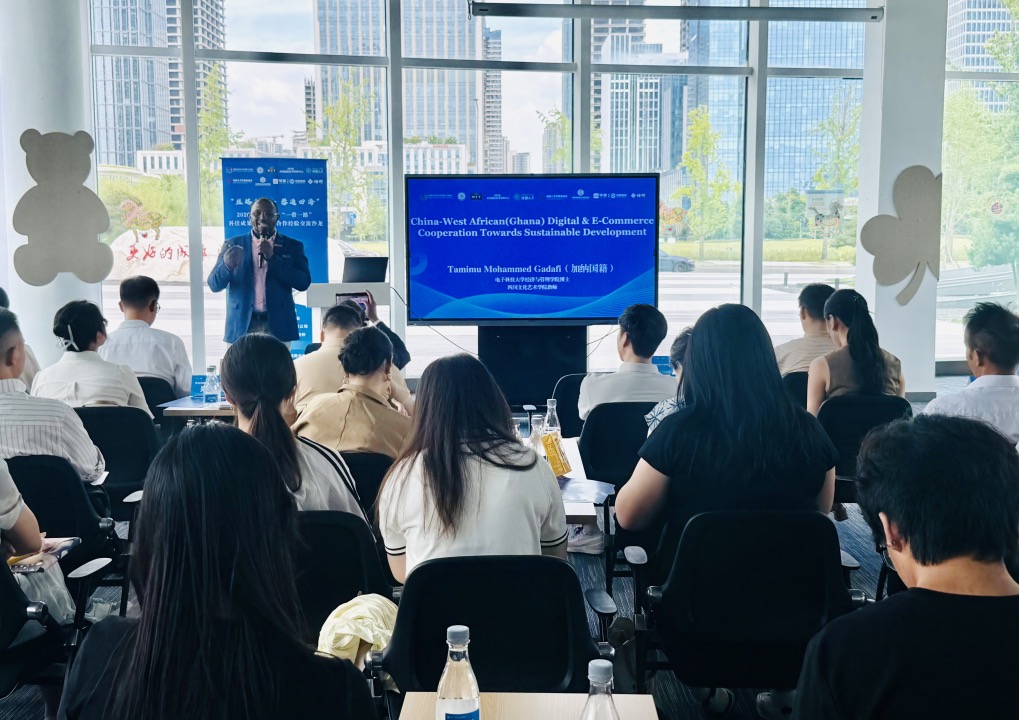
By presenting Ghana’s technological development needs from an African perspective, Gadafi provided valuable market insights and practical recommendations for Chinese enterprises, technology transfer platforms, and innovation organizations seeking international expansion opportunities.
The salon further facilitated discussions among participants regarding international technology transfer mechanisms, overseas commercialization strategies, and collaborative innovation ecosystems. Participants exchanged views on how universities, research institutions, enterprises, and technology service organizations could strengthen cooperation under the Belt and Road framework.
As an interdisciplinary researcher at UESTC and a young scholar affiliated with CWAS-UESTC, Gadafi has actively engaged in promoting academic exchange and knowledge cooperation between China and Africa. His previous academic activities have focused on research innovation, sustainable development, and Africa-related development issues, contributing to CWAS-UESTC’s mission of promoting global academic dialogue and advancing China–Africa cooperation.
The participation of CWAS-UESTC scholars in international innovation and technology transfer forums reflects the university’s commitment to cultivating globally oriented researchers and strengthening international cooperation networks. Through platforms such as the Belt and Road Initiative, CWAS-UESTC continues to support knowledge exchange, technological collaboration, and sustainable development partnerships between China, Africa, and the wider global community.
Edited by Qianwen Xu





 Address:Qingshui River Campus: No. 2006 West source road, Chengdu high tech Zone (West District)
 Code: 611731
 E-mail: cwasuestc@163.com
 Tel: 0086-028-61831756/61831706
 Fax: 0086-028-61831756/61831706