Editor’s Note: The year 2026 marks the 70th anniversary of the establishment of China‑Africa diplomatic relations and the China‑Africa Year of People‑to‑People
Exchanges. The 2026 Ghana Governance Training Program is one of the 2026 China‑Africa people‑to‑people exchange series hosted by the Center for West African
Studies of UESTC. Co‑organised by the Center for West African Studies of UESTC and the UESTC Base for Sichuan Provincial Cadre Education and Training, the program
targets participants from Ghanaian universities and local public administration authorities. It features a series of special classroom teaching sessions to share
China’s practical experience in governance, promote mutual learning between China and Ghana, and deepen China‑Africa people‑to‑people exchanges. A roster of
distinguished scholars from the university are invited to deliver lectures, offering multi‑dimensional professional insights for Ghanaian participants.
From September 24 to October 2, the 2026 Ghana Governance Training Program was held at the Shahe Campus of the University of Electronic Science and Technology of
China (UESTC). Following the spirit of President Xi Jinping’s congratulatory letter to the opening ceremony of the 2026 China‑Africa Year of People‑to‑People
Exchanges, the program offered thematic teaching focusing on digital and smart governance. The program invited Men Lixiang, Associate Professor and Master’s
Supervisor from the School of Public Administration, UESTC, to give a special lecture on Digital Public Governance. Men Lixiang holds a Doctor of Management
degree from Renmin University of China and is a joint‑training PhD graduate from the University of Edinburgh. His research focuses on digital government and
data governance. He presides over one national‑level research project and several provincial‑ministerial‑level projects, and participates in multiple major
and key projects funded by the National Social Science Fund of China. He has published more than 30 papers in Chinese and English journals including Chinese
Public Administration, Journal of Public Management, Public Administration and Policy Review, E‑Government, Humanities and Social Sciences Communications and
Information Technology for Development. Many of his outputs have been reprinted by the Information Center for Social Sciences of Renmin University of China.
He is the author of multiple monographs and textbooks, and many of his policy recommendations have been adopted by government decision‑making departments.
This theoretical classroom session consisted of two thematic sections with multiple group discussions and intermissions, balancing knowledge delivery with
interactive critical thinking. For Ghanaian public servants and university participants, it presented the evolutionary pathways of global digital governance,
Chinese and foreign institutional policies, practical cases of AI in government administration, and cutting‑edge academic research, providing references for
developing countries advancing digital government transformation.
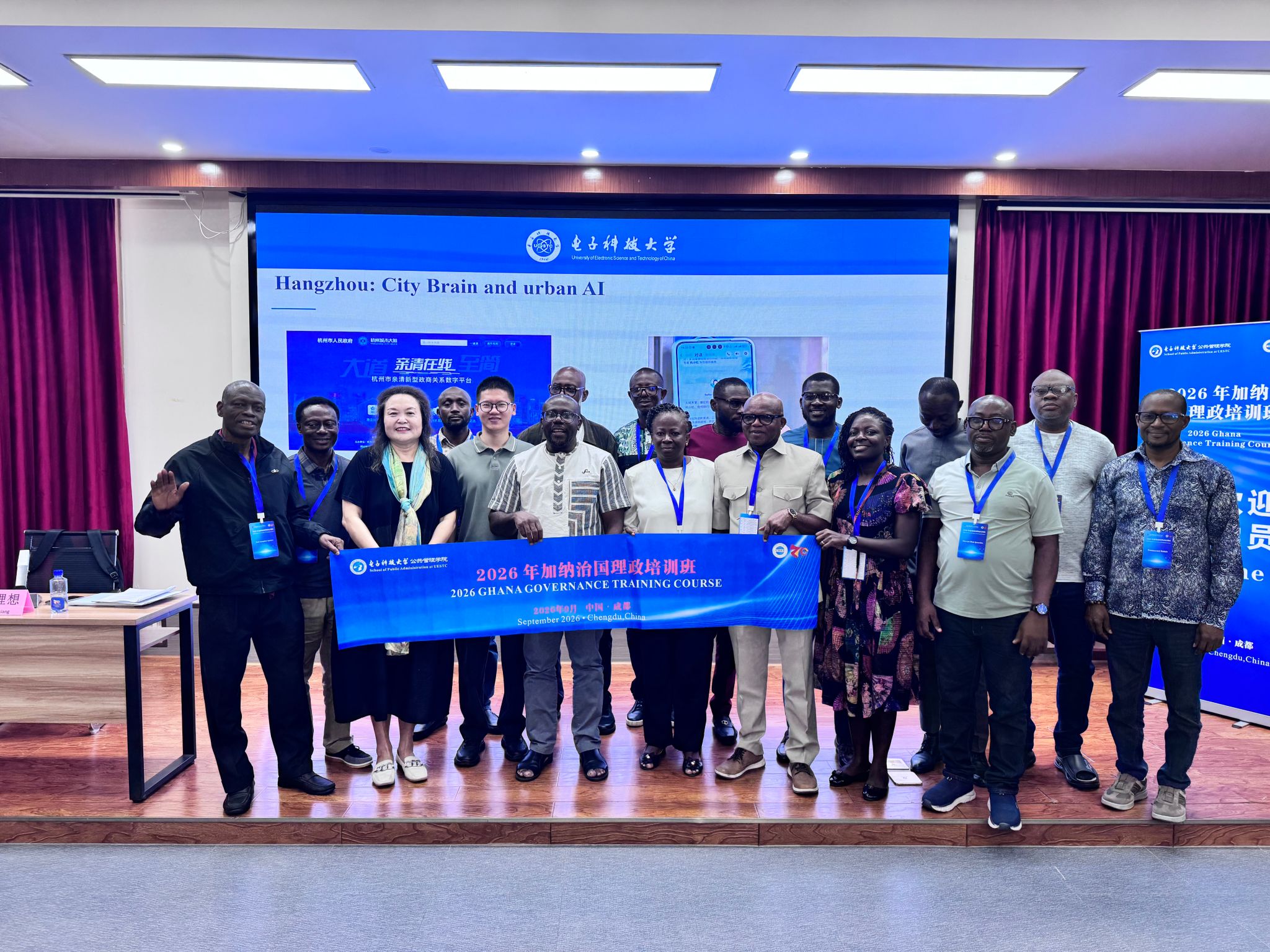
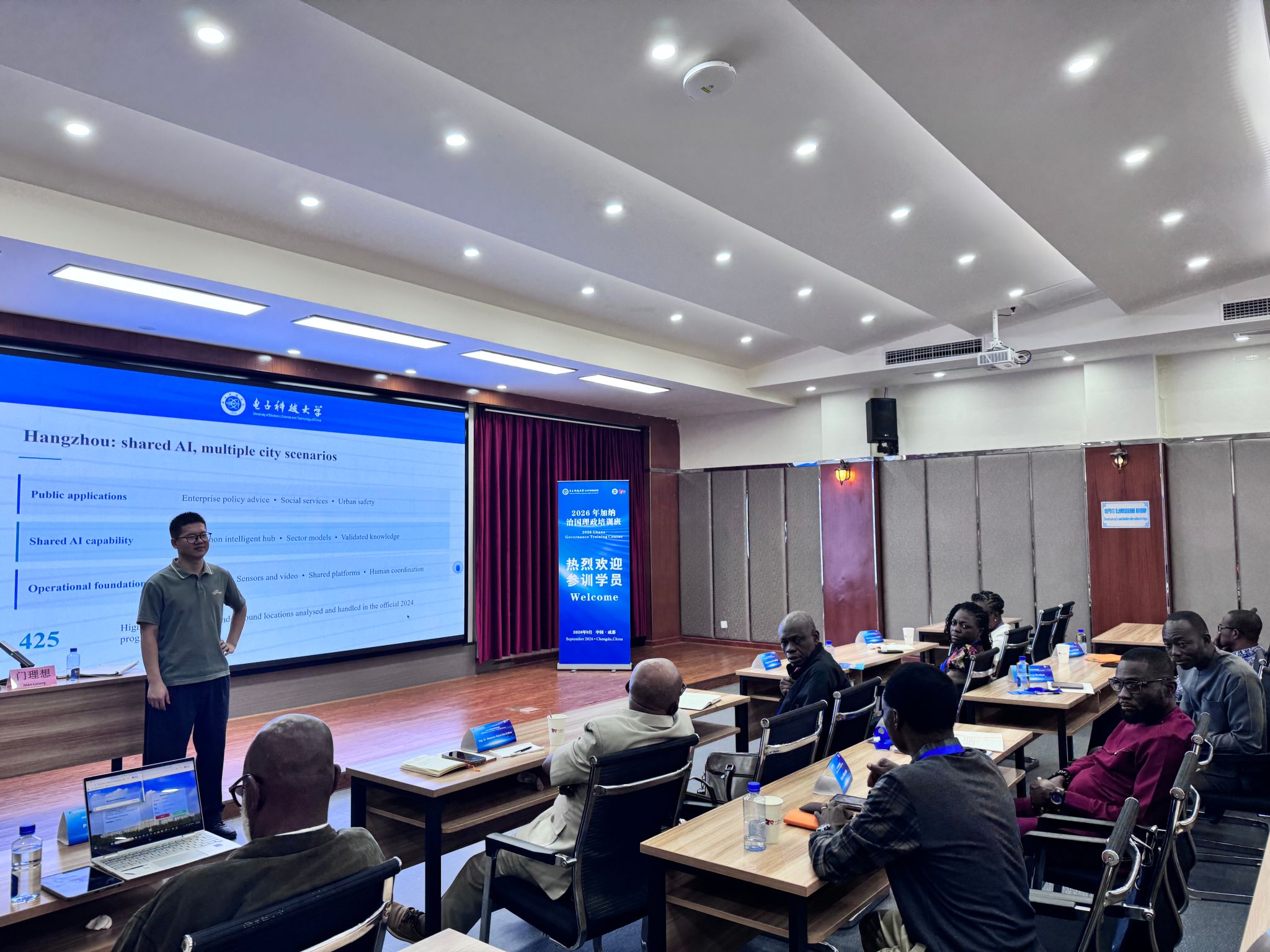
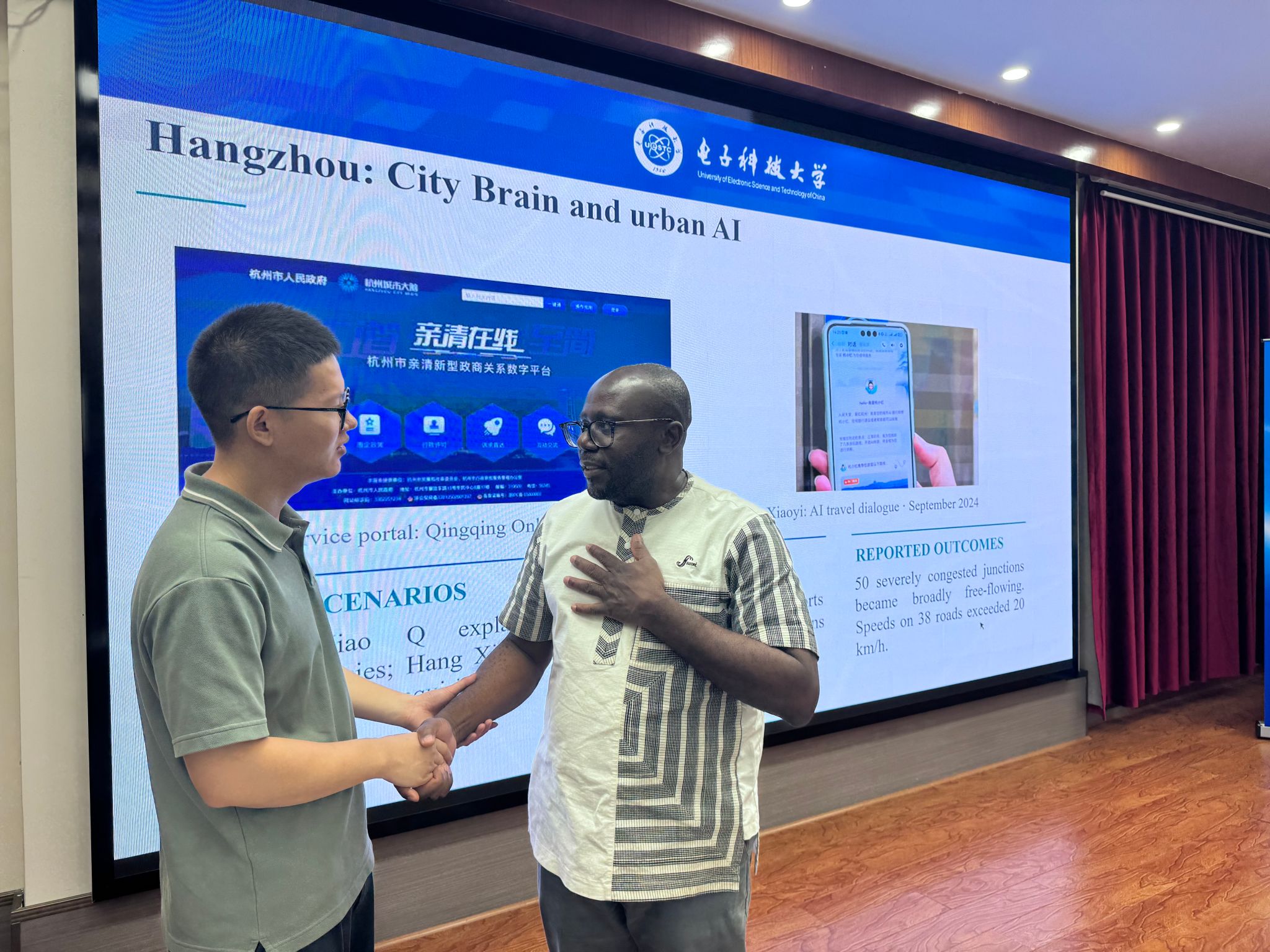
Teaching by Prof. Men in the classroom
In the lecture, Men Lixiang clarified two core dimensions of digital public governance. The first is governance enabled by digital technologies: leveraging data,
platforms and artificial intelligence to realize integrated public services, risk prediction and collaborative decision‑making. The second is governance of
digital transformation: improving institutional systems covering data rules, platform supervision, AI security safeguards and digital inclusion. He reviewed
the three‑stage evolution of global digital governance, tracing the shift from online e‑government services and reconstructed digital government services
toward a new phase of digital public governance that prioritizes public value and accountability mechanisms. Key milestones including China’s Government
Online Project, OECD guidelines for digital transformation, and China’s “AI+” policy were outlined.
In the policy comparison section, the lecture interpreted China’s top‑level policy documents, including Guiding Opinions on Strengthening the Construction
of Digital Government, Overall Layout Plan for the Construction of Digital China, Guidelines for the Deployment and Application of Large AI Models in Government
Administration, and Interim Measures for the Administration of Generative Artificial Intelligence Services. It also made comparisons with international frameworks
such as the EU AI Act, federal AI policies of the United States and the United Kingdom, and the African Union Continental Artificial Intelligence Strategy. It
contrasted differentiated approaches to AI development and risk regulation across jurisdictions, while taking into account the practical context of digital
transformation in Africa.
A wealth of domestic and international real‑world AI‑for‑government cases were presented. Domestic examples included Shenzhen’s “Shen Xiao‑i” AI government
assistant, Futian AI digital staff, Hangzhou City Brain, and the “Qinqing Online” platform. It objectively noted that although AI improves procedural efficiency,
administrative accountability must remain in the hands of public officials. International cases covered the UK GOV.UK Chat, an AI regulatory assistant for the
construction sector in Singapore, and France’s Albert government assistant. Four practical take‑aways were summarized, including the maintenance of trusted
knowledge bases and the primacy of human accountability. Reflection questions on piloting government AI in developing countries were raised for participants.
The second unit addressed cutting‑edge academic research on digital public governance. It mapped domestic and international research trajectories, established
a four‑tier analytical framework covering individual citizens, organizational teams, networked institutions, and state‑society relations, and introduced core
theories together with five frontier research directions. Professor Men stressed that evaluating government AI should not focus merely on response speed and
accuracy; greater weight should be given to public governance indicators such as task completion efficiency, citizens’ administrative burden, group equity, and
operation‑and‑maintenance costs. He also shared empirical research on affective artificial intelligence. Simulated government‑citizen dialogue experiments
demonstrated that interaction consistency most effectively boosts public acceptance. Government AI cannot fully replace human staff; human review and appeal
channels must be retained to uphold accountability bottom lines.
Group discussions were held in a lively atmosphere. Ghanaian participants engaged in in‑depth exchanges on topics including pathways for government‑AI pilots
in developing countries, grounds for technology scaling‑up, AI‑driven administrative burdens, measures to avoid technology‑induced social exclusion, and
trade‑offs between affective interaction and official service delivery.
At the closing of the session, Men Lixiang concluded that artificial intelligence is a tool, and the core objective of digital public governance lies in public
value. In advancing government‑sector intelligentization, countries should avoid chasing technological gimmicks. Instead, they should adapt to local national
conditions, consolidate knowledge bases, uphold human actors as the primary accountability holders, protect vulnerable groups, and prioritize tangible
improvements in people’s wellbeing to achieve technology for social good.
This lecture falls under the “Digital Smart Governance” module of the training program. Rooted in China‑Africa people‑to‑people and mutual learning
exchanges, it combines China’s practical experience of digital government with governance realities in West African nations, broadening Ghanaian participants’
perspectives on digital governance. While the training program has concluded, dialogue and exchanges between both sides on digital government affairs and data
governance will continue to deepen.
Text by CWAS team
Photos by Xupeifeng, Luohongquan
Edited by Zhangruiheng
Contributed by: School of Public Administration & Center for West African Studies of UESTC, University of Electronic Scienceand Technology of China






 Address:Qingshui River Campus: No. 2006 West source road, Chengdu high tech Zone (West District)
 Code: 611731
 E-mail: cwasuestc@163.com
 Tel: 0086-028-61831756/61831706
 Fax: 0086-028-61831756/61831706